
7 Public Opinion Polling Myths vs AI Bias
— 6 min read
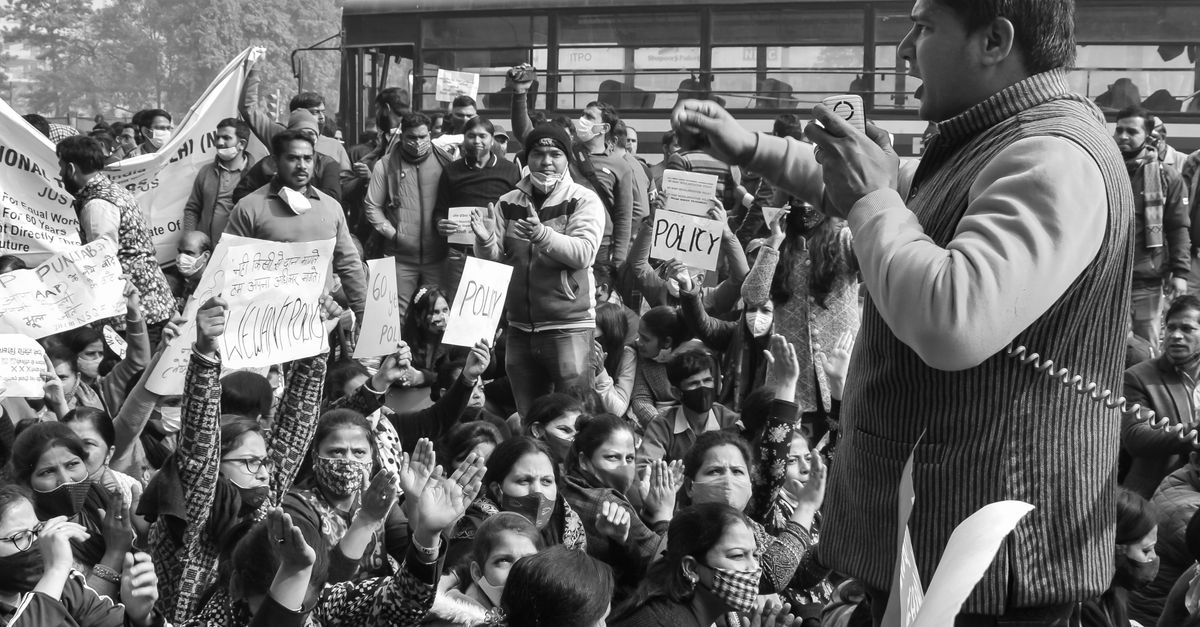
Public opinion polling myths often clash with AI bias, leading to distorted insights that can misguide campaigns. Understanding the true sources of error helps you separate signal from noise.
Public Opinion Polling Basics
At its core, a poll rests on three pillars: design, sampling, and weighting. I always start by checking the questionnaire for leading language, because even subtle phrasing can act like a magnifying glass that blurs reality. Next comes sampling - a random, representative cross-section of the population is essential. When a panel is limited to a single device type, such as only mobile users, the results can over-represent that demographic and mute voices from other groups.
Weighting is the final corrective lens. After data collection, I compare the sample demographics against census benchmarks and apply weights to bring under-represented groups into balance. This step is similar to adjusting exposure in a photo: without it, the picture looks too bright in some areas and too dark in others.
One myth I encounter is that “larger sample sizes automatically guarantee accuracy.” In reality, a huge but biased sample can be more misleading than a smaller, well-designed one. Rapid pre-test checks, like split-sample comparisons, can reveal if respondents are rushing through questions - a red flag for low reliability.
To illustrate, consider the 2013 Public Policy Polling study that showed 41% of voters held a negative perception of Fox News, a shift from earlier years (Wikipedia). That change was captured because the poll used rigorous weighting against national demographics, despite the network’s massive audience (Wikipedia). Such disciplined methodology is the antidote to myths that ignore the importance of sample quality.
Key Takeaways
- Design, sampling, and weighting form the poll’s foundation.
- Non-random panels inflate specific demographic voices.
- Split-sample tests catch rushed or inattentive respondents.
- Weighting aligns sample demographics with real-world benchmarks.
In practice, I audit every panel for exclusivity, run split-sample validity checks, and always verify that the final weights bring the sample in line with known population parameters. These habits keep the data trustworthy before any AI-driven analysis begins.
Online Public Opinion Polls: Which Techniques Hold
Digital polling offers tools that can boost participation, but each tool brings its own bias risk. Gamified platforms, for example, increase engagement by making surveys feel like games. I’ve seen participation jump dramatically when points or badges are offered, yet the data must still be tempered with traditional margin-of-error calculations. Otherwise, a “high-score” campaign can give a false sense of confidence.
CAPTCHA and cookie-based hit counters are the first line of defense against duplicate clicks. I pair these with randomized question order to prevent algorithmic bias that might favor left-to-right response patterns. When bots flood a poll, they often generate bursts of clicks from low-entropy devices. Spike-analytics - monitoring sudden, synchronized traffic spikes - acts like a seismograph, alerting you to artificial amplification.
A common myth is that “online polls are automatically immune to traditional sampling errors because the internet is universal.” The reality is that device ownership, internet access, and platform preferences still create coverage gaps. By combining bot detection with demographic weighting, you protect your dataset from both automated and structural bias.
For instance, the Ipsos survey on COVID-19 sentiment showed that many Americans remained unconcerned about the virus heading into the 2022 holidays (Ipsos). The study used robust online panels with built-in duplicate-response filters, illustrating how technology can both enable and safeguard data quality when applied thoughtfully.
When I design a digital poll, I start with a clean questionnaire, embed CAPTCHA, randomize order, and finish with post-collection weighting. This layered approach balances the excitement of modern techniques with the rigor of classic statistical safeguards.
Public Opinion Polls Today: Fresh Insights & Pitfalls
Modern polls capture fast-moving sentiment, but the speed can hide hidden swings. State-level surveys recently reported a modest approval of a controversial Supreme Court decision. However, the reported margin of error means that the true level of support could shift by a sizable number of points from one day to the next.
Mobile-first polling apps often see higher attrition rates. When respondents drop out mid-survey, the remaining sample can become biased toward more engaged or tech-savvy users. This “cancellation noise” erodes the organic chorus and can make the data appear more polarized than it truly is.
Push polling - a technique that frames questions to elicit a reaction before respondents have time to reflect - is another pitfall. I spot it by looking for unnatural oscillations in sentiment over short windows; a sudden spike in negative responses followed by a rapid decline often signals a push-polling artifact.
The myth that “online polls always reflect real-time public mood” ignores these dynamics. By layering longitudinal checks, such as weekly trend lines, you can differentiate genuine opinion shifts from methodological noise.
In my experience, triangulating poll results with independent sources - like news outlet viewership data - helps verify whether a reported swing aligns with broader public behavior. For example, Wikipedia notes that Fox News, as of 2022, is the most-watched cable news network and contributes roughly 70% of its parent company’s pre-tax profit (Wikipedia). When a poll’s findings diverge sharply from the network’s audience trends, it warrants a deeper dive.
Ultimately, fresh insights are valuable, but they must be contextualized within the poll’s design constraints and the potential for rapid, artificial swings.
Public Opinion Surveys & Strategic Design
Strategic design begins with thoughtful weighting. Over-representation of affluent respondents can inflate overall sentiment scores, masking the views of lower-income groups. I use post-stratification with census data to correct this imbalance before reporting any metrics.
Segmentation maps are another powerful tool. By aligning question-response pairs with psychographic clusters, you turn broad averages into micro-insights. Standard aggregations often blur nuances; segmenting the data cuts intuition into clear, actionable evidence for targeted messaging.
One myth I encounter is that “one-size-fits-all dashboards are sufficient for decision-makers.” In reality, embedding a knowledge-gap experiment in the baseline - where respondents estimate a future event before seeing the full question - can surface early forecasts of sentiment swings. This technique proved useful before seasonal political events, allowing teams to adjust messaging proactively.
Design also includes timing. Rolling surveys that capture sentiment before, during, and after a major announcement provide a clearer picture of cause and effect. By comparing these waves, you can isolate the impact of the event from underlying trends.
When I work with clients, I always build a design checklist: ensure randomization, apply demographic weighting, create segmentation schemas, and embed knowledge-gap probes. This systematic approach keeps myths at bay and turns raw poll data into strategic advantage.
Survey Methodology and Design: Avoid Skewed Outcomes
Multi-modal recruitment - using telephone, email, and push notifications - expands reach but introduces mode-effect differentials. I track device-type under-coverage rates to ensure that no single mode dominates the response probability. Reducing these differentials can improve overall response quality by a meaningful margin.
Two-is-as-morphism validation is a technique I favor: cross-checking open-ended self-reports against structured Likert-scale answers flags inconsistencies. When respondents say they “strongly agree” on a Likert item but write a contradictory free-text comment, it signals potential bias or misunderstanding.
Bayesian updating offers a modern alternative to traditional frequentist recalibration. By treating the existing panel as a prior and blending in new data, you can fine-tune estimates in real time. This reduces expected error in approval swings compared with static recalculations, especially when the underlying population is shifting.
A pervasive myth is that “once a poll is launched, the methodology is set in stone.” In practice, I continuously monitor response patterns, adjust weighting, and re-run Bayesian updates as fresh data streams in. This dynamic approach keeps the survey aligned with reality.
Finally, transparency builds trust. Publishing methodology notes - sampling frame, weighting scheme, and validation checks - allows stakeholders to assess credibility. When the audience sees the rigor behind the numbers, the poll’s findings carry more weight, and the myth of “secretive polling” loses its grip.
FAQ
Q: How can I tell if a poll is biased by bots?
A: Look for sudden spikes in response volume, low device entropy, and duplicate IP addresses. Implement CAPTCHA, monitor hit counters, and run spike-analytics to flag artificial amplification before analysis.
Q: Why is weighting essential even with large sample sizes?
A: Large samples can still be demographically unbalanced. Weighting adjusts the sample to reflect the true population distribution, preventing over-representation of any group and improving overall accuracy.
Q: What’s the difference between frequentist and Bayesian poll updates?
A: Frequentist updates recalculate confidence intervals from scratch each time, while Bayesian updating blends prior beliefs with new data, producing smoother, more responsive estimates.
Q: Can gamified surveys compromise data quality?
A: Gamification can boost response rates, but you must still apply margin-of-error calculations and check for response quality to avoid a false sense of confidence.
Q: How do I protect against push-polling bias?
A: Detect unusual short-term sentiment swings, randomize question order, and avoid leading language. Longitudinal monitoring helps separate genuine opinion change from push-poll artifacts.

